
How long should a dog walk be? For a healthy adult used to regular walks, 20–30 minutes per outing is a practical starting point. Build the day around your dog’s activity needs, with shorter, gentler outings for puppies and dogs who need an easier pace.
- Plan the whole day. Walks, play, and other activities contribute to your dog’s exercise.
- Consider age and breed. A growing puppy, active adult, and older dog may need different routines.
- Account for the outing. Hills, heat, and busy sidewalks can make a familiar walk more demanding.
- Watch their comfort. Build gradually and adjust if your dog struggles during or after a walk.
At Boston’s Best Dog Walkers, we know regular walks can be hard to fit into a busy day. Our solo walks and group walks give owners options for keeping outings part of their dog’s routine. Tell us about your dog and their usual walks so we can help you explore a suitable option.
Keep reading for walk-length examples by age and breed, plus simple ways to adjust your dog’s outings.
Walk Length Examples by Age and Breed
A good walking routine gives your dog enough activity while leaving them comfortable afterward. Here’s how that can look at different stages of life, with a few examples to help you plan the day.
Puppies: Keep Outings Short and Gentle
Once your vet has advised which outdoor settings are appropriate, let your puppy explore at an easy pace. Leave time for sniffing, pauses, and the trip home.
If they comfortably enjoy a 10-minute outing, build familiarity with that walk before extending it. Their stamina will develop as they grow. The popular five-minutes-per-month rule is not scientifically established, so ask your vet for guidance that suits your puppy.
Healthy Adults: Spread Activity Across the Day
Breed can give you a useful starting point. PDSA’s guidance describes total daily exercise, which you can divide between walks and other suitable activities.
These examples show how a healthy adult dog already comfortable with the activity might spend that time:
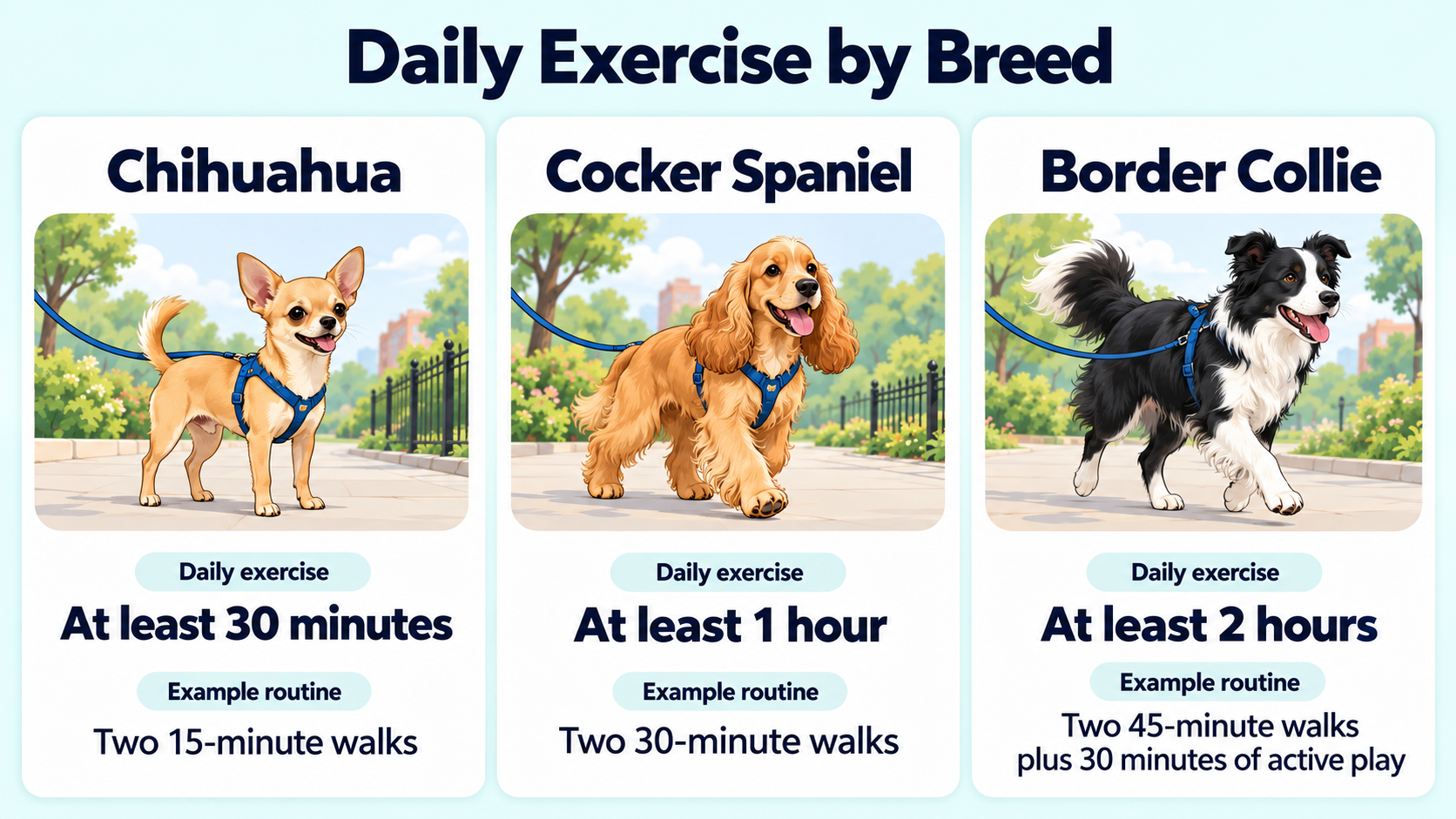
Daily exercise guidance: PDSA’s Chihuahua, Cocker Spaniel, and Border Collie breed guides. Routines shown are examples.
Use these schedules as examples and adjust them to your dog’s health and fitness. For mixed-breed dogs, their current routine and enthusiasm for activity can help you choose a starting point. Include sniffing, training, and enrichment throughout the day too.
Seniors: Make Walks Easy to Enjoy
Older dogs benefit from regular, gentle exercise. If your vet recommends shorter outings, you might split a familiar 20-minute walk into two 10-minute trips.
Choose an easy route and allow a slower pace. A fit senior may still enjoy longer walks, so pay attention to how comfortably they move during the outing and afterward.
Flat-Faced Dogs: Prioritize Comfortable Breathing
Choose cooler times of day, easy routes, and plenty of opportunities to pause. Ask your vet about an appropriate walking routine, especially if your dog has breathing difficulties.
End the outing if they struggle to breathe or show discomfort, even when you are close to your planned finish time.
Choose a Starting Walk Length
Start with a walk your dog already enjoys comfortably. If your healthy adult dog regularly handles a 20-minute neighborhood loop, you could try adding a short block while keeping the same easy pace. Repeat the longer route and check how they feel afterward before extending it again.
Consider what the outing involves:
- Pace and terrain: Hills, uneven trails, and brisk walking add effort. Keep a new, more demanding route shorter than your dog’s familiar easy walk.
- Time to sniff: Leave room for your dog to explore. A relaxed neighborhood outing offers a different experience from a fast walk.
- Weather: Choose cooler hours and shade on warm days. When conditions are unsafe, keep outdoor trips brief and offer suitable activities indoors.
- Busy surroundings: Crowds, traffic, and other dogs can make an outing harder to handle. Try a quieter route if your dog seems uneasy.
Include the walk alongside your dog’s other outings and activities when planning the day. Choose times you can maintain consistently, and change one part of the outing at a time so you can see how your dog responds.
If your dog is returning from illness or injury, follow your vet’s exercise plan.
When to Adjust the Walk
Watch how your dog moves during the outing and feels afterward:
- They seem uneasy or distracted: Try a quieter route and give them more space.
- They still want something to do: Add opportunities to sniff or a short activity at home before extending the walk.
- They slow down or struggle to keep up: Head home and make the next outing easier.
- They limp, seem stiff, or remain unusually tired: Contact your vet, especially if it happens repeatedly.
Change one part of the walk at a time so you can see what helps.
Choose a Walk Your Dog Can Enjoy Again Tomorrow

A good walk gives your dog time to explore and leaves them comfortable afterward. Use the examples above to plan the day, then build gradually as your dog’s fitness improves.
Need a hand fitting walks into your day? Contact Boston’s Best Dog Walkers to discuss an option that suits your dog.