
Learning how to walk a dog that pulls starts with a little practice somewhere quiet. Reward a few steps with a loose leash. If your dog pulls toward an interesting smell, pause and continue once the leash relaxes. If they seem worried or overwhelmed, give them space and help them reach a calmer spot.
These habits can help you get started:
- Reward your dog when they walk comfortably near you.
- Pick a quiet route where it’s easier to practice.
- Leave time for sniffing and breaks.
- Use the same cues and rewards with everyone who walks your dog.
- Ask for help if walks feel unsafe or your dog seems frightened.
At Boston’s Best Dog Walkers, we offer solo walks and training services. Tell us how walks are going and what you’d like help with. We can talk through the available options together.
Keep reading for a step-by-step walking plan, tips for choosing comfortable gear, and ways to make practice easier for your dog.
Why Your Dog Pulls on Walks
An interesting smell or a familiar dog can make your pup eager to move faster. When pulling gets them where they want to go, they learn to keep doing it.
Fear can also drive pulling. A dog who feels uncomfortable may hurry toward home or try to escape a crowded sidewalk. Watch where your dog is heading and what happened just before the leash tightened. Those clues help you understand what they need.
How to Train Loose-Leash Walking: Five Steps
Before you start, have treats ready and check that your dog’s harness fits comfortably. Use a fixed-length leash you can hold securely, keeping it free of tangles and loops around your hand or fingers.
Start with short sessions somewhere quiet. These steps use reward-based training to help your dog practice walking with a relaxed leash. If your dog seems frightened or reacts intensely, work with a qualified professional on a plan suited to their needs.
Step 1: Start Somewhere Quiet
Choose a quiet room, enclosed yard, or suitable outdoor space. Have small treats your dog enjoys ready to hand.
Reward your dog for standing or sitting beside you. Once they are comfortable there, take a step and reward them for moving with you. Build up gradually.
Step 2: Reward a Few Loose-Leash Steps
Use a short word such as ‘yes’ to mark the moment your dog is walking with slack in the leash, then give a treat. Keep your reward easy to reach.
Begin with just a few steps. As your dog gets the hang of it, gradually increase the distance between rewards. Return to more frequent rewards when practicing somewhere new.
Step 3: Pause When Your Dog Pulls Forward
When your dog pulls toward a smell or other destination, pause safely and keep the leash steady.
Wait for the leash to loosen. If your dog turns toward you or comes closer, praise them and continue walking. Use a gentle voice to encourage them back if needed, keeping the leash steady as they move.
Step 4: Make Sniffing Part of the Walk
Give your dog opportunities to investigate safe smells. Leave time for them to explore along the route.
You might reward a few relaxed steps with a ‘go sniff’ cue and time beside a tree or patch of grass. Choose accessible spots with enough room to keep the leash loose.
Step 5: Practice Around Mild Distractions
Move to a slightly busier place when your dog is managing the quieter setting comfortably. Keep enough distance from distractions for them to respond to you.
Build up distractions gradually. If your dog repeatedly pulls, return to an easier setting or move farther from the distraction. Try again where they can respond to you comfortably.
On familiar routes, notice small changes: a longer stretch with a relaxed leash, a quicker response to your cue, or an easier turn away from a distraction.
Use those observations to choose the next practice goal. Progress will vary with the dog and the setting.
What to Try When Your Dog Keeps Pulling
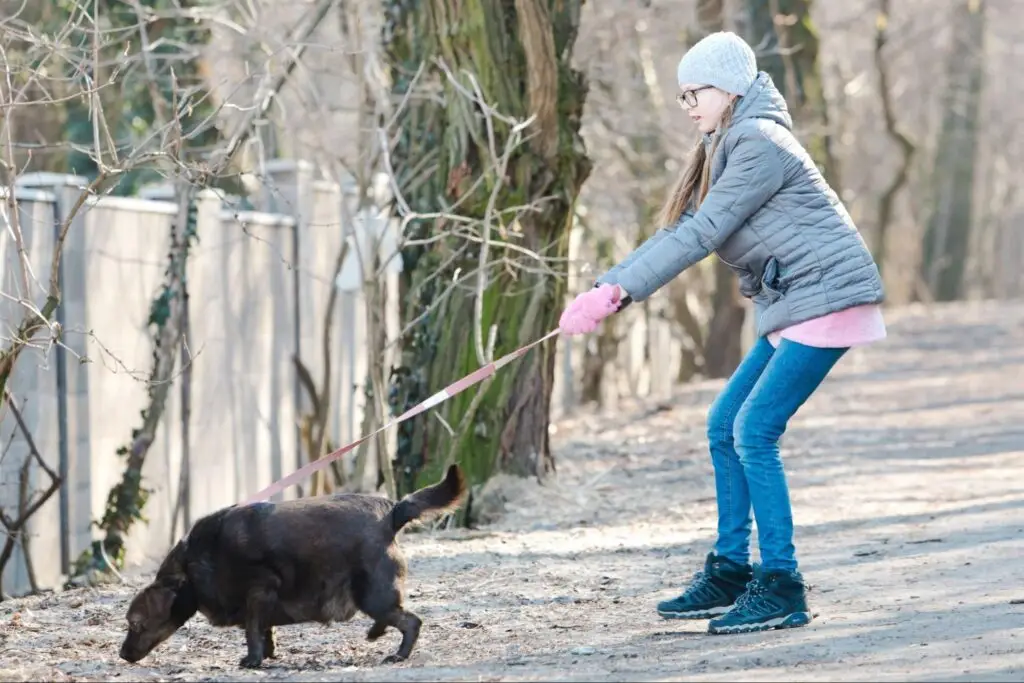
If practice feels difficult, try an adjustment based on what you notice:
- Pulling again after each treat? Reward sooner during the next few steps, while the leash is still loose.
- Walking well at home but pulling outside? Try a quieter spot or move farther from the distraction.
- Losing interest halfway through? Take a break and shorten the next session. Check that the rewards you’re offering are ones your dog enjoys.
When to Get Help With Walking
If your dog’s pulling makes it hard to keep your balance or hold the leash securely, get professional help before attempting that route again. A qualified reward-based trainer can watch you walk together and suggest adjustments.
At Boston’s Best Dog Walkers, we offer dog training and solo walks. Tell us where walks become difficult and what you’ve tried so far. We can talk through the available services and discuss how we may be able to help.
Contact your veterinarian if you notice sudden behavior changes, discomfort, or new aggression. Underlying health conditions can influence behavior, and an examination can help your vet identify possible causes.