
What your dog’s walking pattern says about their health often shows up long before obvious symptoms. Small changes in stride, posture, or behavior can signal discomfort, fatigue, or underlying issues if you know what to look for.
Most owners think of walks as routine exercise. But in reality, every walk is feedback.
The way your dog moves, pauses, or reacts is constantly telling you how their body feels. The challenge is knowing what matters.
Here’s what dog owners should know at a glance:
- Subtle gait changes get dismissed as “just a slow day”
- Behavior shifts are mistaken for mood or distraction
- Patterns go unnoticed because walks are inconsistent
- Early discomfort is pushed instead of adjusted
- Small signs are seen once, not tracked over time
This is exactly why structured, one-on-one walks like those used in Train & Play Daycare or guided daily walking routines make a difference, they create consistency, making small changes easier to spot.
If you want clearer insight into your dog’s health, it starts with paying attention to how they move and behave every single walk.
And once you understand what those small changes actually mean, you stop guessing and start making better decisions that protect your dog long before problems escalate.
Your Dog’s Walk Reveals More Than Exercise
Most owners see walks as routine, but every step your dog takes is feedback about how their body feels. Movement patterns, posture, and behavior shifts all tell a story long before obvious symptoms appear.
When you start looking beyond distance and energy, walks become one of the most reliable ways to spot early changes in your dog’s health.
Walking Reflects Physical Comfort Levels
Your dog’s movement shows how comfortable their body feels in real time.
Subtle changes in stride, pacing, or posture often signal discomfort before visible pain appears, making everyday walks a valuable window into their physical condition.
Small Changes Signal Bigger Issues
What looks like a minor slowdown or hesitation can point to underlying strain or fatigue.
These early shifts often go unnoticed but tend to repeat consistently, making them one of the first indicators that something is changing internally.
Movement Patterns Show Compensation
Dogs naturally adjust how they move to avoid discomfort.
Shifting weight, shortening steps, or altering posture are ways they compensate, and these patterns can reveal which part of the body is under stress during routine walks.
Behavior During Walks Reveals Stress
Changes in focus, pace, or willingness to continue often reflect more than mood.
Behavioral shifts during walks can signal physical discomfort or fatigue, especially when they appear suddenly or repeat across similar walking conditions.
Consistency Helps You Spot Real Change
One-off changes are less important than patterns that repeat over time.
When the same movement or behavior shows up across multiple walks, it becomes a reliable signal that your dog’s condition may need closer attention or adjustment.
Once you start noticing patterns, walks become a clear signal instead of routine exercise. That is where gait and posture help you understand what your dog is actually telling you.
Gait And Posture Clues That Reflect Physical Condition
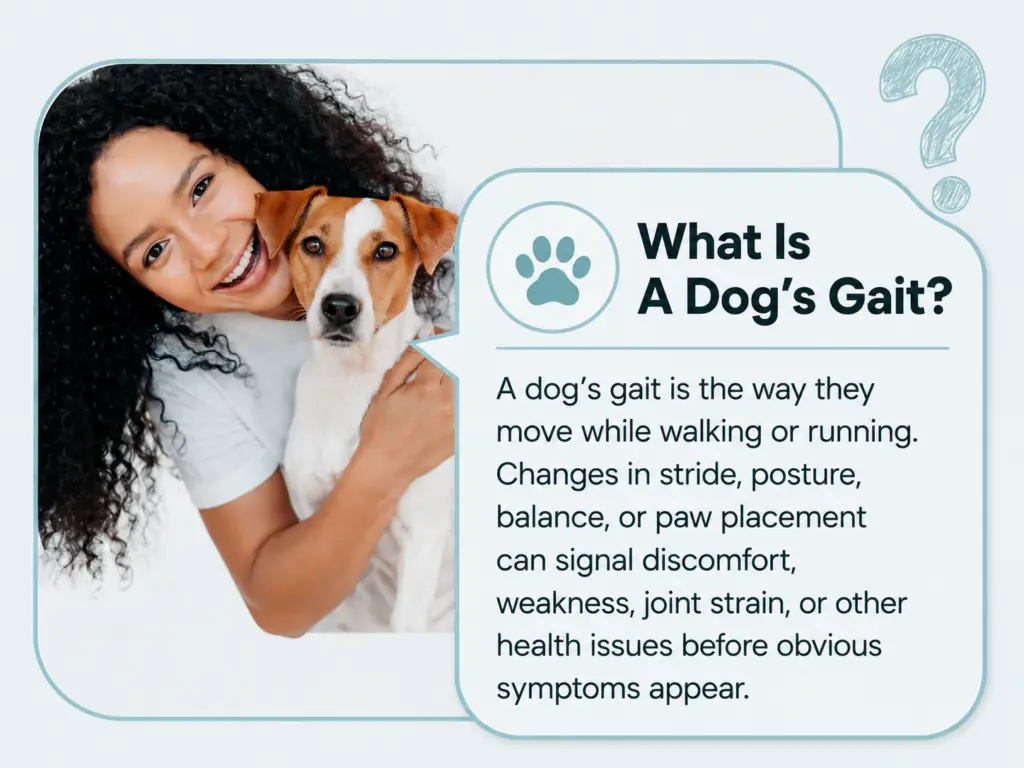
Your dog’s walking pattern can reveal physical stress long before obvious symptoms appear.
The key is comparing current movement to their normal baseline and noticing changes in stride, posture, paw placement, and how weight is distributed.
These patterns help you move from guessing to observing with clarity.
Short Stride Signals Protection
A shortened stride often means your dog is protecting a specific area.
You may notice smaller steps on one side, hesitation when turning, or stiffness after rest. These changes usually point to localized discomfort that needs attention.
Reduced Push-Off Shows Weakness
When your dog loses power in movement, it often shows in the rear.
They may walk normally but lack drive, appear sluggish on inclines, or stop sooner than expected, signaling reduced strength or developing fatigue.
Posture Changes Reveal Pain Patterns
Changes in back line, head movement, or stance often signal discomfort.
A head bob or uneven posture suggests your dog is shifting weight away from a painful area, even if they still appear willing to walk.
Weight Shifting Shows Compensation
Dogs naturally redistribute weight to avoid strain.
Leaning to one side, standing wider, or sitting unevenly can signal that your dog is compensating, which can put extra stress on other joints over time if left unaddressed.
Paw Placement And Wear Show Repetition
How your dog places their paws reveals repeated movement patterns.
Scuffing, uneven nail wear, or outward stepping can indicate instability or avoidance. These consistent patterns often highlight issues that are easy to miss during a single walk.
Once you understand these movement patterns, the next step is recognizing when they signal something more serious.
That is where consistent changes in your dog’s walk help you decide when to adjust and when to act.
Common Walking Changes That Signal Underlying Issues
Changes in how your dog physically moves can be one of the clearest signs that something feels different. Pay attention to changes that are new, happen repeatedly, or become more noticeable over time.
Limping After Rest Or Activity
A limp that appears after resting or following activity can signal that your dog is favoring part of their body. Pay attention to when the limp appears and whether movement makes it better or worse.
Stiff Movement That Gradually Improves
Some dogs may start a walk moving stiffly before loosening up after a few minutes. When this is a change from their normal movement, it is worth tracking across multiple walks.
Uneven Movement During Walks
Bunny hopping, drifting to one side, shortened steps, or an uneven gait can show that your dog is changing how they move. These differences may become more noticeable as your dog gets tired.
Changes On Different Surfaces Or Speeds
Watch whether your dog moves differently on pavement, stairs, inclines, or at a faster pace. A change that consistently appears under certain conditions can help you identify which movements are more difficult.
Repeated Changes Across Multiple Walks
One unusual step may not tell you much. A limp, stiffness, or gait change that keeps appearing gives you a much clearer reason to pay attention.
Physical movement is only part of the picture. Your dog may also start behaving differently on walks, even when an obvious gait change is harder to see.
Behavioral Signs During Walks That Signal Discomfort
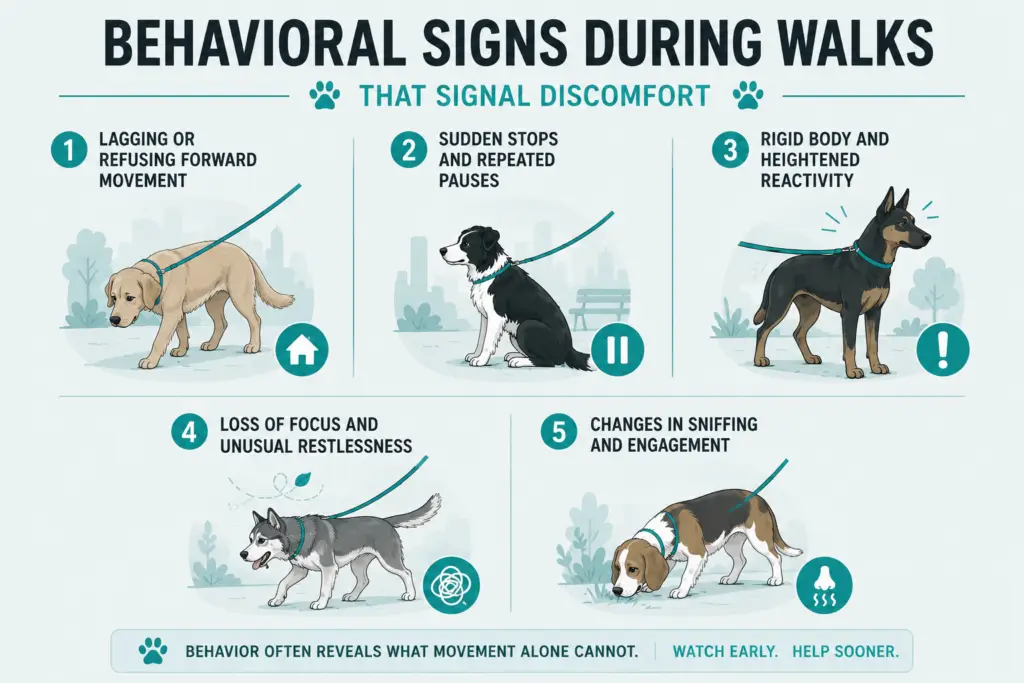
Sometimes the first thing you notice is not how your dog walks, but a change in how they behave during the walk. Compare these behaviors with what is normal for your dog and pay particular attention when they appear suddenly or repeatedly.
Reluctance To Continue Walking
Slowing down, repeatedly hesitating, sitting down, or trying to turn toward home can tell you that your dog is less willing to continue than usual. This is different from their normal stops to sniff or explore.
Unusual Reactivity Or Irritability
A dog that suddenly becomes more reactive toward people, dogs, handling, or nearby activity may be feeling uncomfortable or vulnerable. What matters most is whether the reaction is unusual for your dog.
Loss Of Focus Or Restlessness
Difficulty settling into the walk, repeatedly changing direction, or seeming unusually distracted can signal that your dog is not feeling or behaving like they normally do.
Changes In Sniffing And Engagement
Pay attention when a dog that normally loves to sniff suddenly shows little interest, or when their sniffing becomes unusually frantic or scattered. Changes in how they engage with their surroundings can provide another clue that something is different.
Why Professional Dog Walking Helps Spot Early Health Changes
Subtle changes in movement or behavior are easy to miss when they happen gradually. Consistent walks with an experienced handler can make those changes easier to notice and track over time.
Professional dog walking can help because:
- Consistent routines create a baseline. Similar routes and walking conditions make changes in pace, posture, gait, or energy easier to recognize.
- Experienced walkers know what to watch for. Small shifts in movement or behavior may stand out sooner when someone is paying close attention throughout the walk.
- Walks can be adjusted when something seems off. Pace, distance, or route can be changed based on how your dog is moving that day.
- Regular updates help reveal patterns. Notes and photos from repeated walks can make it easier to see whether a change was temporary or keeps happening.
- One-on-one walks allow closer observation. With fewer distractions, the walker can focus more closely on your dog’s movement, comfort, and behavior.
At Boston’s Best Dog Walkers, our structured one-on-one walks give us the consistency and attention needed to notice when something changes from one walk to the next.
The Bottom Line On What Your Dog’s Walk Reveals

Your dog’s walking pattern is not just movement, it is one of the most reliable ways to understand their physical condition, comfort level, and early signs of strain before they become serious issues.
Movement patterns determine everything.
When you pay attention to consistent changes in gait, posture, and behavior, you can catch discomfort early, adjust routines, and prevent small issues from turning into long-term problems.
For owners who want clarity and confidence in their dog’s health, the right structure makes a measurable difference:
- Structured Dog Walking: Consistent, one-on-one walks that make it easier to track movement patterns, behavior shifts, and early signs of discomfort in real time.
- Train & Play Doggie Daycare: Supervised environments where dogs move, interact, and are observed closely, helping identify changes in energy, mobility, and social behavior.
- Bark Bus Hiking Adventures: Guided outdoor outings that build endurance and confidence while allowing experienced handlers to monitor movement under different conditions.
Together, these services create consistency, awareness, and early detection, giving you a clearer picture of your dog’s health and helping you act before small changes become bigger concerns.